Oct 20, 2025
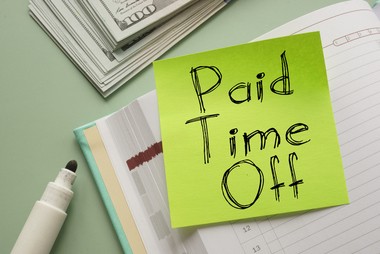
Life has a way of throwing curveballs at us that require time away from work to resolve them. Running a personal errand, taking a sick family member to a doctor's appointment or attending a child's parent-teacher conference are some examples of when having paid time off to be used at your own discretion is greatly valued. Employees no longer need to categorize their absence; all time away from work comes from the same single source.
Many companies have already taken the step to bundle their employees' paid leave hours into a single PTO policy. Employees consider it to be one of the most valuable employee benefits. From the employer's perspective, having a single PTO bank streamlines the management of employee time off. There is no longer a need to track whether PTO is to be counted as vacation, sick days or personal days. Companies that have already implemented combined PTO have found it fosters a sense of autonomy and trust among their employees. Employees appreciate the idea that they can use the time as they see fit and do not have to be concerned with how many vacation days they have left in the year.
Take a look at both sides
Of course, there are advantages and disadvantages of combining sick days with other paid absences from work you need to consider before offering it to your employees. For one thing, you will need to check your state's requirements regarding how you structure the policy. Some states require the employer to have paid sick time off. Other states may require employees to bring documentation proving they were off for an illness. You may be required in some jurisdictions to pay out all the days in the bank when an employee leaves, regardless of whether it was for a sick day or a vacation day.
Here are some details worth assessing during the decision-making process.
For the employee:
There is greater flexibility and less stress with a combined-plan option in place. Employees are given the responsibility of deciding for themselves how they want to use their bank of hours without feeling stressed. This is especially true in terms of sick days when an unexpected illness strikes. With combined PTO, the employee does not have to worry whether they have enough sick time to cover their absence. As you can imagine, this engenders a more positive feeling toward the company when the employee feels that the company has their back.
For the employer:
A streamlined tracking operation allows employers to monitor a single system instead of multiple systems. There are fewer policies and less paperwork to manage and explain. There is no need for an employer to decide whether an absence is considered a sick day or not. With that said, there is less of an incentive for employees to call in sick to avoid losing sick days. And combined PTO contributes to greater job satisfaction and employee retention.
In some cases, an employee will use all their combined PTO early in the year and not have any time left for an unexpected illness. If this happens, the employee may need to work while sick or take unpaid leave. The most prudent advice is for employers to encourage employees to spread out PTO over the year so they do not fall short. In some instances, companies have adopted a hybrid PTO model that has a general bank for vacation and personal days and a separate bank for sick days.
What about carryovers?
Related to this is the idea of carrying over PTO from one year to the next. Some states require this, and the rules can be complex. Employees often like the idea of saving up dates in case of a long-term illness or a big vacation. Businesses can appreciate the advantages of keeping employees happy but may be worried about someone saving up weeks of vacation and taking off four months at once.
The bottom line? With issues like bundling and carrying over, it's best to work with HR and legal professionals, who can advise you on the practical and legal implications of your decisions.
©2025

Sep 24, 2026
Employers are painfully aware that they face a 21st-century skills shortage. Companies are bent on hiring a "new collar" workforce to keep up with advances in technologies like artificial intelligence and automation. Read through to learn about an untapped resource.
Sep 23, 2026
If you're having a problem with the IRS, you have rights! For one, you don’t have to go it alone. You are allowed to have an expert in your corner. Read through for details on the regulations that protect you.
Sep 22, 2026
Inflation is a key challenge that businesses of every size face when developing compensation strategies. Read through to see how your business can position itself in the competitive wage war to attract and retain employees.
Sep 21, 2026
The gig economy, characterized by companies hiring short-term, contract or freelance workers, has been surging since the 2020 pandemic when people were mandated to work remotely. By current estimates, one-third of American workers are doing some form of gig work. Read through to learn more about what this arrangement is doing to traditional payroll structures.
Aug 27, 2026
The pandemic reshaped how and where work gets done, disrupting the U.S. office market and accelerating the shift toward remote and hybrid models. While return-to-office efforts have focused on productivity, collaboration and culture, they have also been influenced by practical concerns such as long-term leases and underused office space. Read through to see how hybrid work continues to evolve.
Aug 26, 2026
Your company has terminated an employee — and now you're bracing for what they might say about their former workplace online. Social media can turn a disgruntled former worker into a very public critic. Read through for an overview of ways to prevent disparagement through culture and policy, deter it with a nondisparagement clause and respond to it with legal help.
More News & Press can be found in our Archive.