Jul 30, 2026
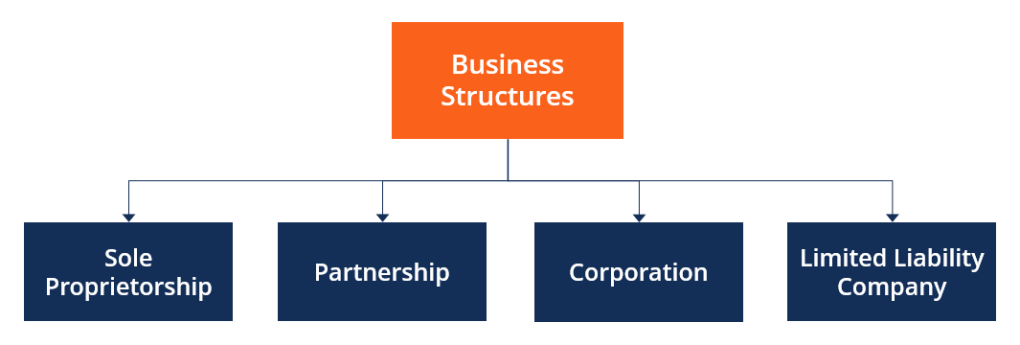
Choosing the right business format is a critical step in establishing your business venture. Each structure has unique features, from tax implications to liability protections, that can significantly impact your operations and goals.
A sole proprietorship is the simplest and least expensive business structure to create and operate. As the owner, you report profits or losses on your personal tax return and bear full personal liability for business debts. This format requires no formal corporate maintenance.
In a general partnership, all partners share personal liability for business debts and report profits or losses on their personal tax returns. Partnerships are simple and inexpensive to establish and operate. One key advantage is that general partners can use their personal resources or obtain financing based on their credit and assets without turning to external investors. This avoids diluting control or ownership, which would happen with external investors.
A limited partnership creates two kinds of business owners. Limited partners are those who do not participate in management. They have limited liability for business debt, but they receive returns, similar to dividends, on their investment. The second kind of owner, general partners, remain personally liable for business debts. While more expensive to set up than a general partnership, this structure is common among real estate companies.
A limited liability company provides owners the same protection from personal liability as a limited partnership. However, it also offers the option of partnership taxation. As a partnership, the LLC receives pass-through tax treatment, meaning that profits and losses are reported on the members' individual tax returns, thus avoiding the double taxation that corporations often face. If the LLC instead chooses to operate as a C corporation, this benefit is lost. Although creating an LLC is more expensive than forming a sole proprietorship or partnership, an LLC is easier to maintain than a corporation.
A professional limited liability company offers the same advantages as an LLC, with additional benefits for state-licensed professionals. Members, who must belong to the same profession, are not personally liable for the malpractice of other members, though they remain liable for their own acts of malpractice. PLLCs receive pass-through tax treatment by default; however, single-member PLLCs are treated as sole proprietorships, while multi-member PLLCs are treated as partnerships unless they elect corporate status. This entity type is not available in all states.
A C corporation provides limited liability for its owners. Owners may take salaries or wages (which are deductible business expenses for the corporation) or dividends (which are not deductible business expenses). Owners may also balance how much income they take as salaries and instead leave profits in the corporation. This flexibility can help optimize individual taxation, particularly when individual income tax rates are higher than the corporate rate. C corporations can have an unlimited number of shareholders, and shares of stock can be sold to raise capital. However, they are more expensive to establish and require shareholder meetings to maintain corporate status.
Professional corporations are similar to C corporations but tailored for professionals in the same field. Owners are not liable for the malpractice of others but are liable for their own. Like a C corporation, this structure offers taxation benefits and requires meetings, minutes and reports to maintain corporate status.
S corporations combine limited liability for owners with pass-through taxation. Owners report their share of profits or losses on personal tax returns, and income is allocated according to ownership percentages. This structure allows shareholders to use corporate losses to offset income from other sources (e.g., wages or investments), reducing their overall tax liability. S corporations are more expensive to create and require greater formality than LLCs.
A nonprofit organization serves charitable, educational, religious or scientific purposes. Donors to NPOs enjoy tax-deductible giving. Formalities include annual meetings, reports and minutes. Property transferred to a nonprofit remains with the nonprofit and, if that nonprofit is dissolved, must be passed to another nonprofit.
This overview does not cover all the details and complexities of business structure, so consulting with business counselors, attorneys and accountants is highly recommended. While conversion to a different structure is possible at a later date, it may result in tax consequences or unintended dissolution.
©2026

Sep 24, 2026
Employers are painfully aware that they face a 21st-century skills shortage. Companies are bent on hiring a "new collar" workforce to keep up with advances in technologies like artificial intelligence and automation. Read through to learn about an untapped resource.
Sep 23, 2026
If you're having a problem with the IRS, you have rights! For one, you don’t have to go it alone. You are allowed to have an expert in your corner. Read through for details on the regulations that protect you.
Sep 22, 2026
Inflation is a key challenge that businesses of every size face when developing compensation strategies. Read through to see how your business can position itself in the competitive wage war to attract and retain employees.
Sep 21, 2026
The gig economy, characterized by companies hiring short-term, contract or freelance workers, has been surging since the 2020 pandemic when people were mandated to work remotely. By current estimates, one-third of American workers are doing some form of gig work. Read through to learn more about what this arrangement is doing to traditional payroll structures.
Aug 27, 2026
The pandemic reshaped how and where work gets done, disrupting the U.S. office market and accelerating the shift toward remote and hybrid models. While return-to-office efforts have focused on productivity, collaboration and culture, they have also been influenced by practical concerns such as long-term leases and underused office space. Read through to see how hybrid work continues to evolve.
Aug 26, 2026
Your company has terminated an employee — and now you're bracing for what they might say about their former workplace online. Social media can turn a disgruntled former worker into a very public critic. Read through for an overview of ways to prevent disparagement through culture and policy, deter it with a nondisparagement clause and respond to it with legal help.
More News & Press can be found in our Archive.