Nov 20, 2025
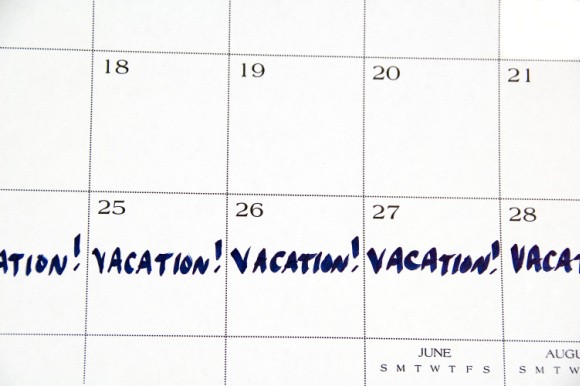
Start with the idea that 30 days of leave are the bare minimum for staff. These days of leave include vacation days, sick days, holidays and other personal days.
Typically, U.S. employers grant 10 days of paid vacation time — two full weeks — per year to each full-time employee. Holidays, roughly 10 per year, are defined as national or state holidays that everyone takes off.
For private industry workers, paid vacation time is allocated by experience — the more time someone spends with a company, the more vacation days they're given. On average, a person who has been with a company for one to five years receives 10 days. Employees who have been with the business for five to 10 years receive an average of 15 days for vacation. Employees who have worked at a business between 10 and 20 years receive, on average, 17 days, while a tenure of 20 or more years comes with an average of 20 vacation days.
When creating your vacation policy, you may want to establish rules based on answers to the following questions:
Holidays are treated differently than vacation days. According to the Bureau of Labor Statistics, 79% of all private industry workers have paid holidays; 83% of workers in service occupations receive paid holidays; and 96% of management, business and financial occupations receive paid holidays.
Rethink PTO policy
Instead of giving separate allocations for vacation, sick and personal days, you may instead choose a paid time off policy. With a PTO policy, your employees have a fixed number of days that they can use for any personal reason.
Under a PTO policy, an employee might accrue four hours of PTO for every 40 hours worked (meaning one day is accrued every two weeks worked). The accrual rate may change the longer the employee is with the company. This policy motivates employees to work to earn their PTO and results in a sense of accomplishment when they do. But it also can encourage workers to come into the office when they are sick because they don't want to "waste" their hard-earned PTO on illness but would prefer to save it for vacation. Similarly, the policy can feel discouraging to new employees, who start with zero days.
An alternative to this traditional PTO is an open or unlimited PTO policy. It allows employees to take as much PTO as they want; there's no cap on PTO as long as work gets done and the policy isn't abused. Unless the employee is taking several days off in a row, an open PTO policy doesn't require that the employee provide a reason for taking the days. Such a policy shows that work–life balance is a priority for your company. Still, many employers worry that the policy will be taken advantage of.
One difference between PTO and traditional vacation/sick/holiday plans is how unused PTO is paid. When an employee quits or is laid off, you're not required to pay out any unused PTO; this is different from the requirement under traditional plans to pay unused vacation days. If an employee doesn't use all their PTO by the end of the year, you have to consider state law. Most states have a use-it-or-lose-it policy in place saying that employees need to take PTO days or forfeit them.
On average, paid leave accounts for $2.59 of the average cost of an employee per hour or 7% of a business's total employee costs. It's important to consider what you can afford when deciding which type of time-off policy is right for your business. Still, when a time-off policy is comprehensive, generous and flexible, employees feel valued and cared for, which increases their loyalty to your company and can increase productivity.
©2025

Sep 24, 2026
Employers are painfully aware that they face a 21st-century skills shortage. Companies are bent on hiring a "new collar" workforce to keep up with advances in technologies like artificial intelligence and automation. Read through to learn about an untapped resource.
Sep 23, 2026
If you're having a problem with the IRS, you have rights! For one, you don’t have to go it alone. You are allowed to have an expert in your corner. Read through for details on the regulations that protect you.
Sep 22, 2026
Inflation is a key challenge that businesses of every size face when developing compensation strategies. Read through to see how your business can position itself in the competitive wage war to attract and retain employees.
Sep 21, 2026
The gig economy, characterized by companies hiring short-term, contract or freelance workers, has been surging since the 2020 pandemic when people were mandated to work remotely. By current estimates, one-third of American workers are doing some form of gig work. Read through to learn more about what this arrangement is doing to traditional payroll structures.
Aug 27, 2026
The pandemic reshaped how and where work gets done, disrupting the U.S. office market and accelerating the shift toward remote and hybrid models. While return-to-office efforts have focused on productivity, collaboration and culture, they have also been influenced by practical concerns such as long-term leases and underused office space. Read through to see how hybrid work continues to evolve.
Aug 26, 2026
Your company has terminated an employee — and now you're bracing for what they might say about their former workplace online. Social media can turn a disgruntled former worker into a very public critic. Read through for an overview of ways to prevent disparagement through culture and policy, deter it with a nondisparagement clause and respond to it with legal help.
More News & Press can be found in our Archive.