Aug 26, 2025
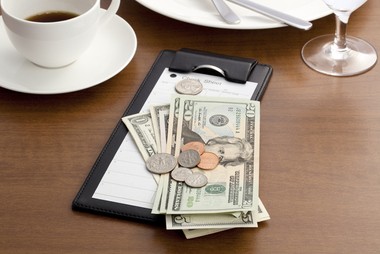
The One Big Beautiful Bill Act allows certain employees to deduct a portion of their reported tip income from federal income tax.
The law provides an above-the-line deduction of up to $25,000 in reported tip income. An above-the-line deduction reduces taxable income before calculating adjusted gross income, and it can be claimed even if the standard deduction is taken.
The tip deduction phases out for taxpayers with modified adjusted gross income over $150,000 ($300,000 for joint filers) and is scheduled to expire after 2028. The deduction applies only to occupations classified by the IRS as "customarily and regularly receiving tips." The IRS will publish that list by Oct. 2, 2025.
To be eligible, employees must report tips of $20 or more in a month to their employer, and those who are self-employed must report them on their own tax return. Qualified tips include voluntary cash, charged tips or app tips from customers as well as tips received through tip sharing.
Estimates suggest that eligible workers could see an increase in average take-home pay of $1,675 per year. Waiters, bartenders and hairdressers are likely to qualify.
However, not all tipped workers will benefit. The Yale Budget Lab, a nonpartisan policy research center, estimates that more than one-third of tipped workers already pay no federal income tax because of low pay. Additionally, many workers — such as cooks, dishwashers and other back-of-house staff — typically do not receive tips and are therefore ineligible.
Important limits
The deduction does not eliminate all taxes on tips. State and local income taxes still apply, as do payroll taxes for Social Security and Medicare. Noncash tips remain taxable and are not covered under the new deduction. Employers must include tips — including cash tips — in paycheck calculations and withhold the required taxes.
Employers and other payers must file information returns with the IRS showing the amount of qualified cash tips and the occupation of the recipient.
The IRS will provide transition relief for tax year 2025 for both taxpayers claiming the deduction and employers or payers meeting the new reporting rules.
The law also expands an existing tax credit for certain businesses, such as restaurants, allowing them to claim credits for payroll taxes paid on tips.
Because the rules are new, there may be confusion over eligibility and reporting. It is advisable to consult a qualified tax professional to understand the requirements.
©2025

Sep 24, 2026
Employers are painfully aware that they face a 21st-century skills shortage. Companies are bent on hiring a "new collar" workforce to keep up with advances in technologies like artificial intelligence and automation. Read through to learn about an untapped resource.
Sep 23, 2026
If you're having a problem with the IRS, you have rights! For one, you don’t have to go it alone. You are allowed to have an expert in your corner. Read through for details on the regulations that protect you.
Sep 22, 2026
Inflation is a key challenge that businesses of every size face when developing compensation strategies. Read through to see how your business can position itself in the competitive wage war to attract and retain employees.
Sep 21, 2026
The gig economy, characterized by companies hiring short-term, contract or freelance workers, has been surging since the 2020 pandemic when people were mandated to work remotely. By current estimates, one-third of American workers are doing some form of gig work. Read through to learn more about what this arrangement is doing to traditional payroll structures.
Aug 27, 2026
The pandemic reshaped how and where work gets done, disrupting the U.S. office market and accelerating the shift toward remote and hybrid models. While return-to-office efforts have focused on productivity, collaboration and culture, they have also been influenced by practical concerns such as long-term leases and underused office space. Read through to see how hybrid work continues to evolve.
Aug 26, 2026
Your company has terminated an employee — and now you're bracing for what they might say about their former workplace online. Social media can turn a disgruntled former worker into a very public critic. Read through for an overview of ways to prevent disparagement through culture and policy, deter it with a nondisparagement clause and respond to it with legal help.
More News & Press can be found in our Archive.